What Is Game Loop?
July 5, 2026
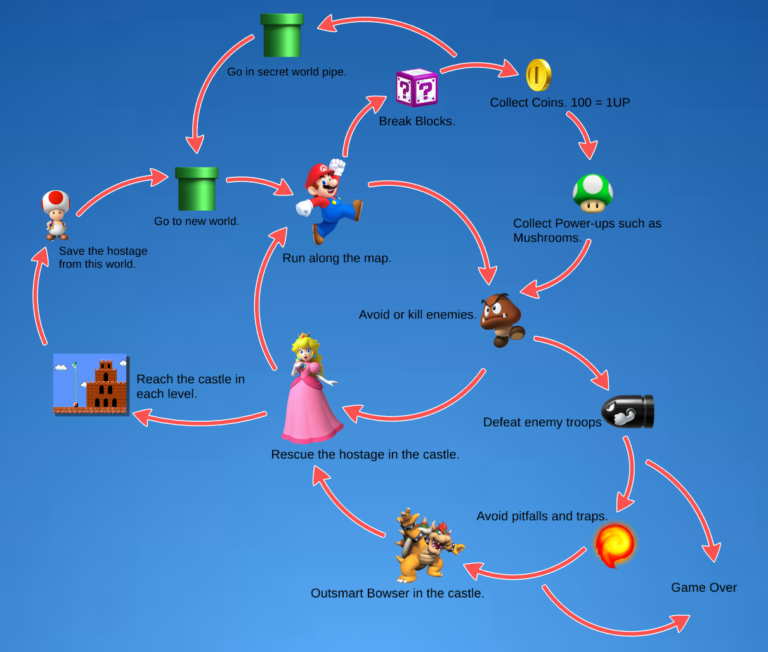
A Game Loop is the core mechanism that drives a game's execution, continuously running while the game is active to process input, update game state, and render graphics to the screen. It is one of the most fundamental concepts in game development.
At its simplest, a game loop consists of three main phases: processing input (keyboard, mouse, or controller), updating game logic (physics, collision detection, AI behavior), and rendering the updated frame to the display. This cycle repeats continuously, often dozens of times per second.
One critical aspect of game loop design is managing frame rate consistency. Techniques like fixed timestep and delta time are used to ensure the game behaves consistently regardless of the hardware's processing speed, preventing issues like objects moving faster on high-performance devices.
Modern game engines such as Unity, Godot, and LibGDX abstract much of the low-level game loop implementation, allowing developers to focus on game logic rather than manually managing the update-render cycle. However, understanding what happens under the hood remains valuable for debugging performance issues.
Learning how a game loop works is often the first step in game development, forming the foundation before diving into more advanced topics like physics engines, animation systems, and multiplayer synchronization.